
Planning your 3 days Vienna trip? Here’s what you shouldn’t miss.
Vienna, the capital of Austria, brims with history and charm. In only 3 days in Vienna, you can soak up its imperial heritage and see its famous sights at a relaxed pace. This easygoing guide gives first-time visitors a straightforward itinerary for Vienna sightseeing, complete with practical tips. This 3 days Vienna itinerary will help you explore the capital of Austria without stress.
Day 1 takes you through Vienna’s historic city center. First, visit some of the top attractions in Vienna, like St. Stephen’s Cathedral and the grand Hofburg Palace. These must-see spots show the heart of imperial Vienna.
On your second day in Vienna, start with a visit to the stunning Schönbrunn Palace – one of the top attractions in Austria. After exploring the palace and its gardens, head to the lively Prater amusement park. In the evening, you can enjoy fun rides, bright lights, and tasty snacks.
Day 3 blends some of Vienna’s top museums with local hangouts – from world-class collections at Maria-Theresien-Platz to unwinding by the Danube like a true Viennese.
✨ 3 Days in Vienna – Sightseeing Plan for First-Time Visitors
🏛️ Day 1 – City Center Highlights & Classic Vienna
- 🍰 8:00 – Breakfast at one of Vienna’s classic cafés (Café Central, Sacher, Demel or Gerstner)
- 🏰 9:00 – Palais Ferstel (arcade passage)
- 👑 9:05 – Palais Kinsky (ornate interior)
- 🏛️ 9:15 – Am Hof Square (historic plaza)
- 🛍️ 9:30 – Graben (pedestrian street)
- ⛪ 9:45 – Stephansplatz & St. Stephen’s Cathedral
- ⚰️ 10:15 – Capuchin Crypt (Kapuzinergruft)
- 🏠 11:00 – Mozart’s House (exterior)
- 🍴 11:20 – Griechenbeisl tavern (Vienna’s oldest, exterior)
- 🕰️ 11:30 – Ankeruhr (Art Nouveau clock)
- 🏛️ 11:35 – Hoher Markt (old market square)
- ⛪ 11:45 – St. Rupert’s Church
- 🌊 12:00 – Break by Danube Canal
- ⛪ 12:30 – St. Peter’s Church
- 🛍️ 13:00 – Kohlmarkt (shopping street)
- 🏰 13:30 – Michaelerplatz & Hofburg (exterior)
- 🏛️ 14:00 – Heldenplatz
- 🌷 14:15 – Volksgarten park
- 🏛️ 14:30 – Rathausplatz & Parliament
- 🖼️ 15:00 – Maria-Theresien-Platz & MuseumsQuartier
- 🌳 16:00 – Burggarten
- 🖼️ 16:30 – Albertina (museum & viewpoint)
- 🎭 17:00 – Vienna State Opera (exterior or tour)
- 🎨 17:45 – Secession Building (Art Nouveau icon)
- 🌸 18:00 – Karlsplatz & Karlskirche
- 🎵 18:30 – Stadtpark (Johann Strauss statue)
- 🎡 20:00 – Prater evening – ride the Giant Ferris Wheel
🏰 Day 2 – Art, Palaces & Views
- 🍰 8:00 – Breakfast at one of Vienna’s classic cafés (Café Central, Sacher, Demel or Gerstner)
- 🌈 9:00 – Hundertwasserhaus (whimsical architecture)
- 🌿 10:00 – Belvedere Palace Gardens
- 👑 11:30 – Schönbrunn Palace
- 🌄 16:00 – Kahlenberg Hill (panoramic view)
- 🌇 18:30 – Danube Pier 22 (riverside walk & skyline view)
🎨 Day 3 – Museums & Local Life
- 🍰 8:00 – Breakfast at one of Vienna’s classic cafés (Café Central, Sacher, Demel or Gerstner)
- 🖼️ 9:00 – Kunsthistorisches Museum (Art History)
- 🦖 10:30 – Natural History Museum (optional visit)
- ⛪ 12:30 – St. Stephen’s Cathedral (interior tour)
- 🎭 13:30 – Vienna State Opera (guided tour)
- 🏝️ 16:00 – Danube Island (Donauinsel)
- 🌆 18:00 – Danube Canal (waterfront evening drinks)
Public Transport
Getting around Vienna is easy thanks to its excellent public transport network. The city is very walkable, and Vienna trams and the U-Bahn (subway) can quickly connect you to all the major sights. (Tip: consider a 24-, 48-, or 72-hour Vienna ticket for unlimited rides on buses, trams, and subways.)
Start each day early, wear comfy shoes, and get ready to enjoy a weekend in Vienna filled with things to do in Vienna and must-see attractions.
Day 1: Historic City Center & Imperial Vienna
Start your 3 days Vienna adventure in the heart of the city. Begin at the iconic St. Stephen’s Cathedral on Stephansplatz — a 12th-century Gothic masterpiece famed for its colorful tiled roof. If you still have energy, you can climb the cathedral tower. The stairs are steep, but the view over Vienna’s rooftops is worth it – a perfect spot for photos and fresh air.
Next, meander through the Old Town lanes toward the Hofburg Palace, the former imperial residence of the Habsburgs. The Hofburg is a centerpiece of Imperial Vienna — you can tour the lavish Imperial Apartments and learn about Empress “Sisi,” or simply marvel at the grand architecture from outside. Then wander through Heldenplatz and the Burggarten nearby to soak up royal history amid beautiful green spaces.
In the afternoon, continue your Vienna sightseeing along the grand Ringstrasse boulevard that circles the inner city. You’ll pass more historic landmarks like the Vienna State Opera, Parliament, and City Hall along the way.
8:00 – Breakfast at a Classic Viennese Café
Begin your 3 days Vienna trip like a local, with coffee and a sweet pastry at one of the city’s legendary coffee houses. Popular choices include Café Central, Café Sacher, Demel, and Gerstner. These cafés are known not only for their rich coffees and delicious cakes, but also for their elegant, historic interiors.

For a stress-free start, reserve a breakfast table at Café Central, Café Sacher, or Gerstner in advance. These grand cafés are extremely popular and morning queues can be long.
💡 Book online a few days ahead to skip the wait and begin your day hassle-free.
9:00 – Palais Ferstel (Ferstel Palace)
Stroll through the serene, elegant arcade of Palais Ferstel. It feels like a little Italian courtyard tucked away in the city, complete with boutique shops and a hidden fountain gurgling in the center.

9:05 – Palais Kinsky
Step into the splendid Baroque Palais Kinsky. The opulent golden staircase and the painted ceiling frescoes here are well worth a quick look inside.

You can visit the ground floor of Palais Kinsky for free – its majestic foyer and staircase are open to the public during the day.
🇵🇱 History buff bonus: Polish national hero Prince Józef Poniatowski was born in this palace, giving it a special significance to Vienna’s Polish community.
9:15 – Am Hof Square
This quiet square, Am Hof, was once a Roman military outpost. Today it’s a peaceful plaza lined with Baroque buildings.

Back in early medieval times, Am Hof was the center of Vienna. It served as the main marketplace, defensive hub, and political heart of the city before Vienna expanded beyond its old walls.
👨🚒 It’s also home to one of the world’s oldest continuously active fire brigades – a proud little piece of Vienna’s living history!
9:30 – Graben Street
Graben is one of the main pedestrian streets in Vienna’s Old Town. Here you can admire the elaborate Baroque Plague Column and enjoy the elegant ambiance among its upscale shops and cafés.

9:45 – Stephansplatz & St. Stephen’s Cathedral
You’re now at Stephansplatz, the square dominated by Vienna’s most famous church: St. Stephen’s Cathedral. Take in the Gothic exterior from the plaza. If time allows, pop inside the cathedral and even climb one of its towers for a superb city view.

Wolfgang Amadeus Mozart was married in St. Stephen’s Cathedral. On August 4, 1782, he married Constanze Weber in this very church. Many people visit Stephansdom for its beauty, but it’s also filled with personal stories from Vienna’s past.
10:15 – Capuchin Crypt (Kapuzinergruft)
Visit the Capuchin Crypt (Kapuzinergruft), the underground resting place of Austria’s royals. The rows of ornate metal sarcophagi are impressive and a bit haunting to behold.
The Capuchin Crypt is one of Vienna’s most powerful historic sites. Over 140 Habsburg royals are entombed here, including Empress Maria Theresa and Emperor Franz Joseph.
Walking among these decorated coffins, you truly feel the spirit of Imperial Vienna – it’s quiet, moving, and unforgettable. If you want to understand Vienna’s history, don’t miss this place.
11:00 – Mozart’s House (exterior)
See the building where Mozart lived and composed some of his masterpieces. Even from the outside, Mozart’s House (Mozarthaus) is a delight for music lovers, letting you imagine the composer’s life here in the 1780s.
11:20 – Griechenbeisl (exterior)
Glimpse the Griechenbeisl tavern — reputedly Vienna’s oldest restaurant, dating back to the 15th century. Over the years it hosted kings, composers, and poets. The ancient tavern building is charming to see from the street, with its ivy-covered exterior and historic signage.
11:30 – Ankeruhr (historic clock)
Stop by the Ankeruhr, an Art Nouveau bridge-clock where little figures parade across every hour. It’s a fun, quick attraction – try to catch it at 12:00 noon for the full show with all the figures and music!

The Ankeruhr was built in 1914 as an eye-catching advertisement for the Anker Insurance Company. It literally bridges two of their buildings, reflecting Vienna’s knack for blending tradition with innovation. Every hour, another historical figure moves across the clock – a delightful mix of art, timekeeping, and early 20th-century marketing genius!
11:35 – Hoher Markt Square
Hoher Markt is one of Vienna’s oldest squares, originally a Roman marketplace that evolved over centuries. It’s quiet today, but look around and you can spot layers of history hidden in its nooks.
11:45 – St. Rupert’s Church (Ruprechtskirche)
Visit Vienna’s oldest church, St. Rupert’s, which dates back to around the 8th century. It’s very small and peaceful, and interestingly, some stones in its walls were salvaged from ancient Roman ruins — a tangible link to the city’s early history.
12:00 – Danube Canal Break
Take a breather by the Donaukanal (Danube Canal). This urban waterway is decorated with colorful graffiti and, in summer, lined with beachy pop-up bars. It’s a modern, artsy side of Vienna — a nice contrast to all the Old Town history.

The Danube Canal isn’t a natural branch of the Danube at all – it was dug out centuries ago as a flood control channel. It still flows through the city center, and today its banks are a favorite hangout for street artists and sunbathers. In summer, open-air bars and cafés pop up along the water, giving the canal a chill, beachy vibe in the heart of the city.
12:30 – St. Peter’s Church (Peterskirche)
Next, step into St. Peter’s Church, a Baroque beauty known for its green copper dome and lavish interior. Often around lunchtime, you can catch a free organ recital or classical concert here – the acoustics under the dome are fantastic.

13:00 – Kohlmarkt Street
Take a stroll down Kohlmarkt, Vienna’s most elegant shopping street. It links the Graben to the Hofburg, and along the way you’ll pass luxury boutiques and the famous Demel pastry shop. As you walk, enjoy the view straight toward the Hofburg’s dome at the end of the street.

13:30 – Michaelerplatz & Hofburg (exterior)
Now your journey into Imperial Vienna truly begins. On Michaelerplatz, you stand before the grand facade of the Hofburg Palace, the former home of the Habsburg emperors. The ornate Michaeler Gate here was once the palace’s official entrance, leading directly into the imperial compound.
Around the square, take in the contrasts. One side features the Looshaus – a stark modern building from 1911 that shocked Viennese society with its lack of decoration. Opposite that, you’ll see stately Baroque buildings. Beneath your feet (visible through a glass panel in the square) lie the excavated remains of the old Roman camp Vindobona, reminding you of Vienna’s ancient origins.

💡 Did You Know?
Many people say the Hofburg is the largest palace in the world by footprint. It’s not just one building – it’s an enormous complex of 18 wings with over 2,600 rooms! Since it expanded over many centuries, exploring it can feel like walking through a small city within Vienna.
14:00 – Heldenplatz
Heldenplatz is the vast open square in front of the Hofburg Palace. Austria’s history has been made here – the square is lined with statues of heroic figures, and it has witnessed both proud and tragic events over time.

In March 1938, Adolf Hitler stood on the balcony of the Hofburg’s Neue Burg wing at Heldenplatz to proclaim the Anschluss – Austria’s annexation into Nazi Germany. Tens of thousands of Austrians crowded into the square to hear the speech. Today, Heldenplatz serves as a solemn reminder of that dark chapter in history.
14:15 – Volksgarten
Take a break in the lovely Volksgarten (“People’s Garden”). In spring and summer, its rose gardens bloom beautifully, and you’ll have a nice view of the Parliament from here. It’s a calm spot to rest your feet, with fountains splashing and statues among the flowerbeds.

14:30 – Rathausplatz & Austrian Parliament
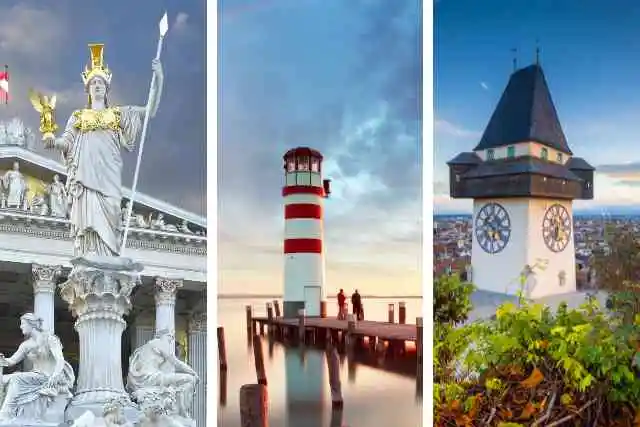
Here you find two of Vienna’s grand civic buildings side by side. On one hand, the neo-Gothic City Hall (Rathaus) towers above Rathausplatz with its tall spire. On the other, the neo-Classical Parliament building stands with Greek-style columns and the statue of Athena out front.

Here’s something many visitors miss 👉 You can go inside the Austrian Parliament, the City Hall (Rathaus), and even the Supreme Court – for free!
🏛️ For Parliament, simply register online in advance for a free guided tour. 🏰 For City Hall, on certain weekdays you can pick up a free tour ticket at the information desk around 8:00 AM. ⚖️ And for the Supreme Court (Justizpalast), you can walk in on weekdays and take the elevator up to its rooftop café – a hidden gem with a fantastic view over the Ringstrasse.
15:00 – Maria-Theresien-Platz & MuseumsQuartier
Cross over to Maria-Theresien-Platz, a majestic square where two mirror-image museums face each other. In the center stands a huge monument to Empress Maria Theresa. It’s one of Vienna’s most picturesque spots. Even if you don’t enter the museums, be sure to take some photos and soak in the imperial grandeur.

🌟 Local Tip
When you’re in the MuseumsQuartier (MQ), don’t miss the free MQ Libelle rooftop terrace on top of the Leopold Museum. It offers a lovely view over Vienna’s rooftops, and you can relax up there with a coffee or snack. Entrance is free (take the elevator inside the MQ courtyard), but it gets popular on sunny days – go early to snag a good seat and enjoy the skyline.
16:00 – Burggarten
Loop back toward the Hofburg and take a break in the Burggarten, a peaceful park that used to be the emperor’s private garden. You’ll see the famous white Mozart statue, and in summer there’s often a floral treble clef in front of it. It’s a great place to relax on the grass, and if you’re thirsty, you can grab a drink at the Palmenhaus café, which sits inside a beautiful glass greenhouse.

💡 Fun Fact
Emperor Franz I (Maria Theresa’s husband) was an avid gardener and even formally studied botany. Believing every ruler should learn a trade, he personally helped plant trees and flowers in the palace gardens. So even an emperor in Vienna sometimes enjoyed getting his hands dirty with a bit of gardening!
16:30 – Albertina
Climb up to the Albertina Museum’s entrance terrace for one of the best free viewpoints in Vienna. From here you have a perfect angle on the Vienna State Opera. You can also pop into the Albertina’s foyer (they sometimes have free exhibits there) or simply take in the outdoor sculptures, like the Monument Against War and Fascism nearby.

17:00 – Vienna State Opera
One of the top Vienna attractions is the Vienna State Opera. If you have time, you can join a short guided tour in the afternoon. These tours are offered in several languages. Inside, you’ll see the beautiful hall and hear about its rich history. If you don’t take the tour, you can still enjoy the stunning outside. Look for the detailed frescoes under the arches. On warm summer nights, you might also catch a live opera on the big screen outside – it’s a free way to enjoy world-class music!

17:45 – Secession Building
At the Secession Building, you’ll encounter a striking white facade crowned by a golden laurel leaf dome – an icon of Vienna’s Art Nouveau movement. Inside (for a fee) you can view Gustav Klimt’s famous Beethoven Frieze. Even if you stay outside, take a moment to admire the building’s unique design and its motto above the entrance: “To every age its art, to every art its freedom.”

18:00 – Karlsplatz & Church of St. Charles (Karlskirche)
Head over to Karlsplatz to visit the magnificent Karlskirche (Church of St. Charles). This Baroque masterpiece boasts a huge green dome and twin columns that make a grand impression. In front of the church is a reflecting pool that beautifully mirrors the facade – great for photos. Inside, an elevator can take you up to the dome’s interior for a close look at the frescoes. Karlsplatz often has art installations or concerts in the evenings, adding to the atmosphere.

18:30 – Stadtpark
Take an early evening stroll through the Stadtpark, a city park split by the little Wien River. The park is known for its many statues of Viennese artists and composers. The most iconic is the gilded statue of Johann Strauss II playing his violin – one of the most photographed spots in Vienna. In spring the park is bursting with flowers, and year-round it’s a lovely place to mingle with locals out for a walk.

20:00 – Prater: Ride the Giant Ferris Wheel
End your first day with fun at the Prater amusement park. Start with a ride on the historic Riesenrad (Giant Ferris Wheel), turning since 1897. From the top, you’ll see beautiful views of Vienna’s city lights. After the ride, take a walk through the colorful fairgrounds. You can enjoy a snack like sweet almonds or cotton candy. If you want more fun, try a few carnival games or hop on another ride.

Day 2: Palaces, Parks & Local Sights
Begin Day 2 with breakfast at one of Vienna’s famous cafés. You can visit Café Central, Demel, Sacher, or Gerstner. Each place offers fresh coffee and sweet pastries in a beautiful, old-style setting – a true Viennese treat to start your day. After that, get ready for a full day of colorful art, grand palaces, and amazing city views.
Your first stop is the quirky Hundertwasserhaus, a brightly colored apartment building designed by artist Friedensreich Hundertwasser. Its whimsical facade, uneven floors, and trees growing from balconies make it look like a fantasy come to life. Snap a few photos of this funky creation – it’s completely different from Vienna’s traditional architecture and showcases the city’s playful side.
Palaces
Belvedere Palace
Next, take a tram or walk to the Belvedere Palace Gardens, one of the most elegant green spaces in the Austrian capital. These formal Baroque gardens lie between the Upper and Lower Belvedere palaces. Stroll past ornate fountains and manicured hedges, and enjoy a wonderful view of Vienna’s skyline from the upper terrace. The best part – the gardens are free to enter, so even if you skip the palace museums, you still get to experience their splendor.
Schönbrunn Palace
Then hop on the U4 subway to reach Schönbrunn Palace – the Habsburgs’ summer residence and one of the top places to visit in Vienna. Explore Schönbrunn’s expansive gardens (don’t miss the rose garden and the hedge maze), and climb the hill to the Gloriette pavilion for a panoramic view back over the palace and city. You can also tour the palace’s opulent interiors with an audio guide, walking in the footsteps of Emperor Franz Joseph and Empress Sisi. Schönbrunn truly lets you imagine the grandeur of Imperial Vienna.
In the afternoon, escape the city bustle with a short trip up to Kahlenberg Hill on the edge of the Vienna Woods. About a 30-minute bus ride from the center, the Kahlenberg lookout offers breathtaking views of Vienna sprawled below, the winding Danube, and even distant hills on clear days. It’s a popular local spot to get into nature and enjoy the panorama. Breathe in the fresh air – it’s a refreshing change after a day of sightseeing.
End Day 2 by the water at Danube Pier 22. This riverside spot is perfect for unwinding – watch the Danube flow by and admire the modern skyline of Vienna’s Donau City district across the river. It’s a peaceful, contemporary setting that feels worlds away from the historic city center, giving you a nice contrast to finish the day.

Day 3: Museums, Culture & Local Life
On your third day in Vienna, dive into the city’s rich culture. Begin your morning at one of Vienna’s grand museums. On Maria-Theresien-Platz, two world-class institutions face each other: the Art History Museum and the Natural History Museum. It’s not easy to choose between amazing art and natural wonders. On one side, the Art History Museum shows the Habsburgs’ rich collection – with Old Master paintings, Egyptian objects, and more. On the other side, the Natural History Museum is full of exciting things like dinosaur bones, rare animals, and shiny gemstones. Either one surrounds you with Austria’s imperial-era splendor.
Vienna’s two grand museums – the Art History Museum (Kunsthistorisches Museum) and the Natural History Museum (Naturhistorisches Museum) – were both opened in 1891 by Emperor Franz Joseph. The Art History Museum is the largest art museum in Austria, and the Natural History Museum has over 30 million objects (including the tiny Venus of Willendorf figurine!).
After a museum morning, experience Vienna’s living culture in the afternoon. For example, join a guided tour of St. Stephen’s Cathedral to venture down into its eerie catacombs. You’ll walk past piles of bones and learn that about 11,000 people were buried under the cathedral – and you’ll even see urns holding the internal organs of Habsburg royalty in the Ducal Crypt. If you prefer music to crypts, take a behind-the-scenes tour of the Vienna State Opera instead. You’ll stand on the stage, see the lavish auditorium, and hear how the opera house opened in 1869 with Emperor Franz Joseph and Empress Sisi in attendance. Either tour will deepen your appreciation for Vienna’s history and arts.
Water
Later in the day, unwind like the Viennese. Hop on the U-Bahn to the long Danube Island (Donauinsel) — a 21-kilometer man-made island created for flood control that today is a beloved recreation spot. Take a leisurely walk or rent a bike. You’ll find locals jogging, cycling, and fishing along the banks. In summer, parts of the island turn into informal “beaches” where people sunbathe or have barbecues. Enjoy the open space and panoramic views of the Danube and the city skyline – it’s a refreshing urban escape after days of sightseeing.
Every June, the Danube Island hosts Donauinselfest – Europe’s largest free open-air music festival. Over three days, around 3 million people flock to the island for concerts and parties. It’s a massive celebration of summer, music, and Viennese spirit!
Evening
As evening falls on your last day, head to the lively Danube Canal (Donaukanal) back in the city center. This waterway is lined with casual bars and food stands, especially in warm weather. Grab a cold beer or a Spritzer (white wine with soda) at a floating bar or a waterfront café. Sit on the embankment amid colorful street art and watch the city lights twinkle around you. It’s the perfect local way to toast the end of your 3 days in Vienna – relaxing by the water among friends and locals, with the city gently humming in the background.
With this 3-day itinerary, you’ve experienced Vienna’s imperial grandeur, artistic treasures, and everyday life. It’s a well-rounded mix of culture, history, and fun – one that will make you fall in love with the capital of Austria and surely leave you eager to return for more.
If you liked my article about things to do in Vienna, then feel free to share it with your friends! 😊 At the same time, don’t forget to check out my delicious food guide – it shows the best Würstelstand (sausage stand) spots in Vienna. 🍴 And here’s a fun fact: these are not just any street food stalls – they are part of UNESCO’s list of Viennese food culture! Check it out and discover the real flavor of Vienna life – The best Wurst in Vienna.